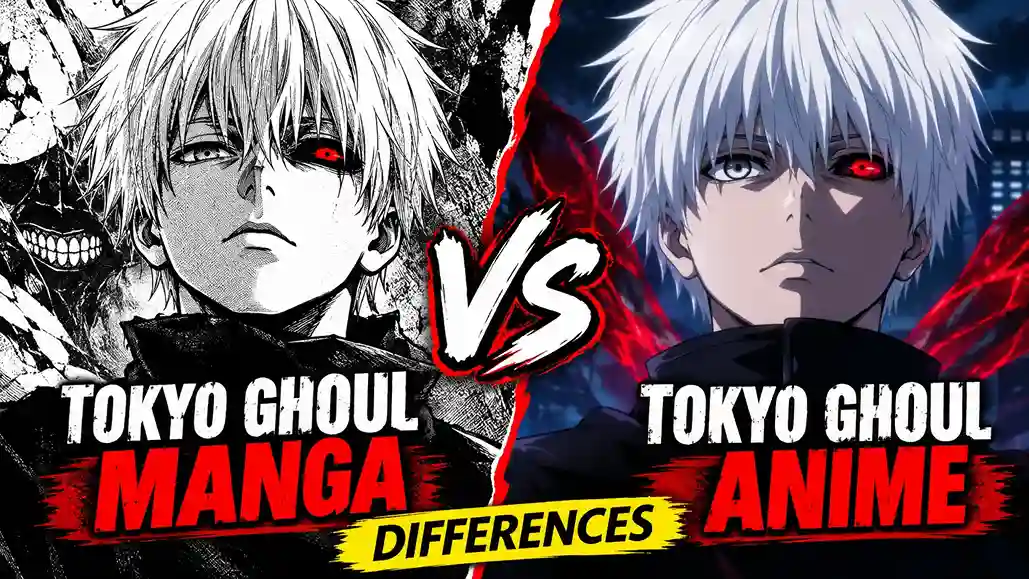
TL;DR: The biggest tokyo ghoul manga vs anime differences are pacing, plot, and tone. The anime squeezes Sui Ishida’s story into short seasons, swaps the manga’s second half for an original plot in √A, and rushes Tokyo Ghoul:re. Read the manga for the full story. Watch the anime for its music, voice acting, and fight animation.
You finished the anime, yet the story feels incomplete. Characters appear without explanation, and √A leaves you with more questions than answers. That gap is real. This guide walks through the tokyo ghoul manga vs anime differences arc by arc, so you know what the anime cut and which version fits you best.
Reviewed by: [Add author name and a short bio here]. Sources: Crunchyroll’s official announcement, Wikipedia’s production records, and ComicBook.com’s 2026 coverage (links at the bottom).
Tokyo Ghoul Manga vs Anime Differences at a Glance
This table gives you the short version before we go deeper.
| Area | Manga | Anime |
|---|---|---|
| Creator and producer | Sui Ishida, published by Shueisha | Studio Pierrot |
| Story length | 143 chapters (Tokyo Ghoul) plus 179 chapters (Tokyo Ghoul:re) | Four seasons of 12 episodes each |
| Story after season 1 | Continues Ishida’s original plot | √A follows an original plot |
| Pacing | Slow and detailed | Fast and compressed |
| Inner thoughts | Heavy narration, especially for Kaneki | Mostly cut or shortened |
| Gore and horror | Fully drawn on the page | Darkened and obscured on TV |
| Ending | Complete conclusion | Stops before the manga’s final chapters |
| Music | None | Strong opening themes and score |
| Best for | The complete story | A fast, stylish introduction |
How the Tokyo Ghoul Story Splits Across Manga and Anime
Tokyo Ghoul has two manga parts and several anime seasons. They do not line up one to one. Here is the map:
- Tokyo Ghoul manga (2011 to 2014): 143 chapters in Weekly Young Jump.
- Tokyo Ghoul anime, season 1 (2014): 12 episodes from Studio Pierrot.
- Tokyo Ghoul √A (2015): 12 episodes with an original story.
- Tokyo Ghoul:re manga (2014 to 2018): the sequel, with 179 chapters.
- Tokyo Ghoul:re anime (2018): two seasons of 12 episodes.
- OVAs: Jack and Pinto, two short side stories.
Together, the two manga parts fill 30 volumes. The four anime seasons add up to 48 episodes. That size gap explains most tokyo ghoul manga vs anime differences you will notice.
Season 1 vs the Manga: Pacing Is the First Big Difference
Season 1 follows the manga’s opening events fairly closely. Ken Kaneki survives a deadly date, becomes half ghoul, and joins the Anteiku café. The anime hits these beats on time, but it hurries through the quiet moments between them.
The manga gives Kaneki room to think. His fear, hunger, and guilt appear in long internal passages, and readers feel his identity crack page by page. The anime turns many of those passages into a single look or a short line of dialogue.
Side characters also lose time. Nishiki’s rivalry and Touka’s slow change from hostile coworker to trusted friend feel smaller on screen. Season 1 ends with Kaneki’s white-haired transformation after his torture, a strong cliffhanger that still skips some of the build-up the manga provides.
√A: The Anime Tells a Different Story
Tokyo Ghoul √A is where the tokyo ghoul manga vs anime differences become impossible to ignore. Wikipedia’s series record confirms that √A follows an original story instead of adapting the next manga chapters.
Fans reacted strongly. Many felt the season dropped the manga’s tension and replaced it with rushed, disconnected scenes. The events, alliances, and character turns in √A do not match what happens on the manga page.
This matters for new readers. If you pick up the manga after √A, you will meet a different version of Kaneki’s path. Treat √A as an alternate take, not a summary of the manga.
Tokyo Ghoul:re Anime vs Manga: Hundreds of Chapters in 24 Episodes
The sequel manga runs 179 chapters. The anime adapts it in 24 episodes across 2018. Something had to give.
The anime keeps the main setup: Kaneki lives as Haise Sasaki and leads the Quinx Squad. It trims the squad’s training, their personal histories, and many of the political fights between ghouls and investigators. Characters you should care about get only a few scenes.
Most importantly, the anime does not reach the manga’s final stretch. Readers who want to see where the war between humans and ghouls ends must open the manga.
Tokyo Ghoul Manga vs Anime Differences in Characters
Character depth is where the manga pulls furthest ahead. The anime shows what characters do. The manga shows why.
Ken Kaneki
Kaneki’s mind is the heart of the story. The manga lets readers sit inside his thoughts for long stretches, so his breakdowns feel earned. The anime shows the same events, but the change in him often feels sudden.
Touka Kirishima
Touka’s bond with Kaneki builds slowly in the manga. The anime compresses that bond, so the emotional payoff lands softer than it does on the page.
Hide Nagachika
Hide’s friendship with Kaneki gets more space in the manga. Readers see how much Kaneki depends on him, which makes later events hit harder.
Haise Sasaki and the Quinx Squad
The manga lets each Quinx member breathe. The anime reduces them to quick sketches, which weakens the family feeling the squad is meant to have.
Art, Gore, and Censorship: How the Two Versions Look Different
Sui Ishida’s linework is detailed, eerie, and often beautiful. His panels show body horror without flinching, and his page layouts add dread through spacing and shadow. This visual style is one of the biggest reasons fans defend the manga.
The TV anime softens that horror. Broadcast scenes often hide violence behind darkness, shadows, or light. The result feels cleaner and less disturbing than the source.
That choice changes the tone. The manga feels raw and uncomfortable. The anime feels moody but safer.
Where the Anime Wins: Music, Voices, and Motion
The anime earns real praise in a few areas:
- Music: The opening song “Unravel” by TK became the series’ signature sound.
- Voice acting: Natsuki Hanae (Kaneki) and Sora Amamiya (Touka) bring strong emotion to their roles.
- Fight animation: Kagune battles move with speed and energy that static panels cannot match.
- Time: You can finish an entire season in an afternoon.
These strengths explain why the anime still brings millions of new fans to the series, even with its story problems.
Tokyo Ghoul Manga vs Anime Differences in the Ending
The two versions do not share an ending. The manga concludes Kaneki’s story in the final chapters of Tokyo Ghoul:re. The anime stops well before that point, and √A already took the story down a separate road.
If you want closure, the manga is the only version that delivers it. This is the single clearest answer to which version is complete.
Latest Updates on Tokyo Ghoul in 2026
Tokyo Ghoul news keeps coming, even without a new anime season. Here is what matters now:
- 15th anniversary: The manga reached 15 years since its debut in 2026, and publishers have marked it. Italy’s J-Pop Manga, for example, launched a Sui Ishida celebration.
- Streaming: Crunchyroll hosts Tokyo Ghoul, √A, and Tokyo Ghoul:re for streaming.
- Theater event: Crunchyroll ran a one-day theatrical event called Sink Your Teeth: A Tokyo Ghoul Celebration in 2025. Details appear in its official release.
- Remake status: A 2025 social media post claimed Signpost and Aniplex would remake the series. A 2026 ComicBook.com feature says nothing has been confirmed.
- Ishida’s view: In a 2022 livestream, Ishida joked that a weak anime might still send people to read the original manga.
- New work: Ishida’s newer series, Choujin X, keeps his fans reading.
- Events: A free Tokyo Ghoul pop-up shop ran at the Tokyo Anime Center in Shibuya in 2026.
Manga First or Anime First? A Simple Guide
Your best choice depends on what you want.
- You want the full story: Read the manga from chapter 1.
- You want a quick taste: Watch season 1, then switch to the manga.
- You already watched everything: Read the manga. The tokyo ghoul manga vs anime differences guarantee fresh material.
- You care about music and visuals: Watch the anime, but treat √A as optional.
Many fans do both. The anime sets the mood, and the manga delivers the depth.
FAQs About Tokyo Ghoul Manga vs Anime Differences
Which is better, the Tokyo Ghoul manga or anime?
The manga is better for story, depth, and ending. The anime is better for music, voice acting, and animation.
Where does the anime stop following the manga?
The anime stays close to the manga through season 1. √A then departs into an original plot.
How long are the manga and the anime?
The manga has 30 volumes across two parts: 143 chapters and 179 chapters. The anime has 48 episodes across four seasons.
Is a Tokyo Ghoul remake coming?
No remake has been officially confirmed. Treat unofficial claims with caution.
Pick Your Version and Start Today
The tokyo ghoul manga vs anime differences come down to one simple choice: speed or depth. The anime offers a stylish, fast introduction. The manga offers the full, uncut story Sui Ishida wrote.
Start with the version that matches your mood tonight. If you finish the anime and want more, open chapter 1 of the manga and see what you missed. Then share your favorite difference with another fan.
Featured Guides

Webtoon Platform · Reviews, Features & Reading Guide

Manga Guide · Romance, Plot & Where to Read

Webtoon Site · Library, Features & Full Review
Anime Guide · Story, Characters & Highlights

Webtoon News · Latest Updates & Reading Tips

Comic Platform · Features, Genres & Guide

Webtoon Access · Free Reading & Full Overview
Manhwa Guide · Story, Chapters & Review
Manhwa Review · Plot, Characters & Reading Order