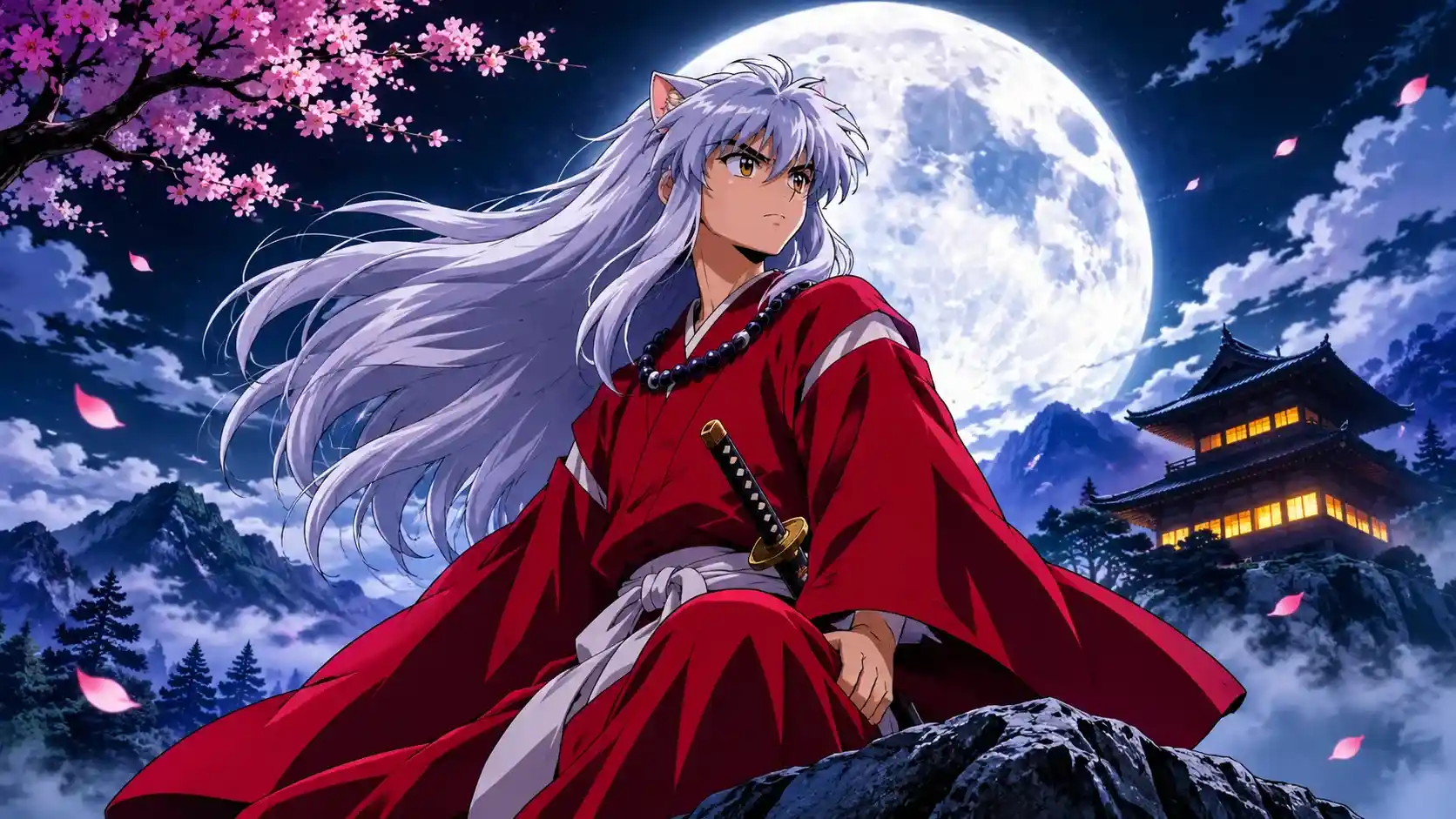
Inuyasha Tsuki is the fan shorthand for one of the most important ideas in Rumiko Takahashi’s classic series: the moon (tsuki, 月) and the way it controls the lives of half-demons. Once a month, the sky goes dark, and the fiercest fighter in the Sengoku era becomes an ordinary human. That single rule shapes battles, romance, and character growth across the whole story.
This guide explains how the lunar system works, why it matters emotionally, how Japanese folklore influenced it, and what is new for the franchise in 2026.
Quick Summary
- Tsuki means “moon” in Japanese, and the moon is a core rule of the series.
- On the new moon night, Inuyasha loses his demon power and turns human.
- Pure demons like Sesshomaru are not weakened by the same cycle.
- The moon links the story to older Japanese legends such as the Bamboo Cutter tale.
- 2026 brings anniversary celebrations, new merchandise, and fresh news from Takahashi.
What Inuyasha Tsuki Means for Fans
For a new viewer, the phrase can sound like a title or a song name. In reality, it is a search shortcut for everything the moon does in the series. Tsuki is the plain Japanese word for the moon, and in Japanese storytelling the moon has always stood for change, hidden truth, and the thin border between the human and spirit worlds.
Takahashi built on that tradition. Instead of treating the night sky as scenery, she turned it into a calendar that every half-demon must obey. Strength, safety, and secrets all depend on what the moon is doing.
Tsuki, Shingetsu and Mikazuki: The Words Behind the Moon
A few Japanese terms help the lunar themes make sense:
- Tsuki (月): the moon in general.
- Shingetsu (新月): the new moon, when the moon cannot be seen. The series often marks this night with the character 朔 (saku).
- Mangetsu (満月): the full moon.
- Mikazuki (三日月): the crescent moon, the shape worn on Sesshomaru’s forehead.
Knowing these words makes it easier to follow episode discussions, fan wikis, and Japanese-language sources.
The New Moon Transformation: Inuyasha’s Monthly Weakness
The best-known example of Inuyasha Tsuki is the new moon night. As the last sliver of light disappears, Inuyasha’s demon blood goes quiet. His silver hair turns black, his golden eyes darken, his dog ears vanish, and his claws and fangs become human.
The change is dramatic because it removes almost everything that makes him dangerous. He cannot rely on his speed, his healing, or his sense of smell. Even Tessaiga, the sword inherited from his father, cannot show its true form in human hands, so he is left holding what looks like a rusty old blade.
Every month, then, he has to survive a full night as a normal teenager in a world full of demons.
Why Inuyasha Tsuki Is Also a Secret
The transformation is not just a physical problem. It is information that enemies would love to have. Inuyasha hides when the new moon approaches, and his friends build plans around it. Kagome, Miroku, Sango, and Shippo end up guarding the one person who usually guards them.
Naraku and other villains understand that a half-demon’s weakness is a perfect target. That is why the new moon episodes tend to feel more tense than ordinary fights. A single mistake can be fatal, and Inuyasha cannot simply swing his way out of trouble.
Dawn as the Reset
When sunrise arrives, Inuyasha’s demon blood returns, along with his hair, ears, and strength. The nightly cycle gives the series a built-in rhythm: danger, shelter, survival, and recovery. It also gives viewers a satisfying sense that the rules are fair and consistent.
Moon Symbolism: Humans, Half-Demons and Full Demons
The moon does not treat everyone equally, and that difference is part of the theme.
| Character type | Relationship with the moon | What it says about them |
| Half-demon (Inuyasha) | Loses demon power on the new moon | Caught between two worlds |
| Full demon (Sesshomaru) | Not weakened by the cycle; wears a crescent mark | Pure, confident, unchanging |
| Human (Kagome) | Uses the moon as a normal time marker | Ordinary, yet spiritually powerful |
Full demons see the moon as a sign of status. Half-demons see it as a reminder of a divided identity. Humans simply live under it. This contrast lets the story talk about belonging and acceptance without stopping the action.
Sesshomaru and the Crescent Mark
Sesshomaru’s crescent moon is one of the most recognizable designs in anime. It signals royal demon heritage, and it is a visual contrast to his half-brother. One carries the moon on his forehead as a badge of power. The other is forced to hide from the moon’s absence.
That contrast is why the brothers’ rivalry feels so layered. They are not only fighting over swords and pride. They stand on opposite sides of the same lunar rule.
Inuyasha Tsuki and the Emotional Core of the Story
Takahashi uses the new moon night as an emotional device. During the day, Inuyasha acts loud, stubborn, and defensive. He grew up rejected by both humans and demons, so he protects himself with attitude.
As a human, that armor is much harder to maintain. He becomes quieter. He has to accept help, and he has to be honest about being afraid. Those scenes with Kagome are some of the most memorable in the series because they show him without his usual shield.
Without the moon, his growth would have been much slower. The lunar cycle repeatedly forces him to accept vulnerability, and that is how his bond with Kagome becomes believable.
Japanese Folklore Behind the Lunar Theme
The series blends historical adventure, romance, and supernatural fantasy, and much of its atmosphere comes from older Japanese stories. The moon is one of the oldest symbols in that tradition.
The Tale of the Bamboo Cutter and Princess Kaguya
One famous legend is The Tale of the Bamboo Cutter (Taketori Monogatari), the story of Princess Kaguya, a mysterious girl connected to the moon. The second Inuyasha film, The Castle Beyond the Looking Glass, features a villain named Kaguya, which gives the audience a clear nod to that legend.
The film also leans on a common folklore idea: when natural cycles are disturbed, something dangerous follows. In a series built around the moon’s power, that message fits perfectly.
Shinto Ideas of Spirit and Nature
Japanese folklore often treats natural forces as spiritual forces. Mountains, rivers, trees, and the moon can all carry meaning. Inuyasha Tsuki fits that worldview because the moon is not just a light in the sky. It is a force with authority over living beings.
Tsuki in the Wider Inuyasha Franchise
The lunar theme did not stay in the original run. It appears across the wider franchise in different ways.
- The anime and manga: the core source of the new moon rule.
- The films: moon-linked stories and folklore nods, especially in the second movie.
- Yashahime: Princess Half-Demon: the sequel follows a new generation of half-demons, where bloodline traits and conditions remain an important part of the setting.
- Music and merchandise: moon imagery is common in artwork, soundtrack themes, and collectibles.
This continuity shows how strong the original concept was. A single rule created decades of storytelling possibilities.
Latest Inuyasha Updates in 2026
Interest in the franchise has grown again this year, and several developments are worth knowing about.
30th Anniversary of the Manga
2026 marks 30 years since the manga began in Weekly Shonen Sunday. The milestone has brought new attention to the series and a wave of retrospective coverage from anime and manga outlets.
New Anniversary Artbook
A 30th anniversary artbook and interview collection, titled Inuyasha: Sengoku Otogi Zoshi, was announced for release in Japan in 2026. According to the announcement, it is intended as a large collection that looks back across three decades of the series, including illustrations and creator interviews. For fans of Inuyasha Tsuki, art and commentary like this can add context about design choices and lore.
Rumiko Takahashi Teases a Major Reveal
Earlier this year, Takahashi posted a teaser suggesting a bigger Inuyasha announcement was coming within months. She did not say what it would be, which led fans to speculate about everything from a new anime project to special publications. The artbook is the confirmed release, but she has not confirmed any further plans. It is best to treat other rumors as speculation until an official announcement appears.
Union Arena Card Game Set
Bandai’s Union Arena trading card game added an Inuyasha set to its English release schedule, with a release date of August 14, 2026. This is the first confirmed Inuyasha set in that particular card game and gives collectors another way to enjoy the franchise.
Takahashi’s Newer Anime Projects
Takahashi’s dark fantasy series Mao received a TV anime adaptation from Sunrise, the studio behind Inuyasha, with core staff members returning from the older production. Many fans consider it a spiritual cousin to Inuyasha because of its supernatural setting and its focus on a long fated journey. A second season for another Takahashi title has also been reported, so her anime output remains busy.
Streaming Access
The franchise has also been boosted by free streaming options. Pluto TV launched a 24/7 Inuyasha channel for North American viewers to mark the 25th anniversary, offering the Japanese audio version with English subtitles. Availability can differ by country, so check your region’s streaming services.
Why Inuyasha Tsuki Still Matters
The moon rule has aged well for three reasons.
- It is simple. Anyone can understand it in seconds: new moon, human form.
- It creates stakes. Strong characters are only interesting if they can be threatened.
- It builds character. The transformation reveals who Inuyasha is when he cannot fight.
Many shows use power systems, but few tie a power system so tightly to emotion and theme. That is a big reason fans still discuss the moon decades after the first broadcast.
How to Rewatch the Series With Tsuki in Mind
If you are planning a rewatch, here are some simple ways to spot the lunar themes:
- Watch the sky. Notice when the moon is shown, hidden, or emphasized.
- Track Inuyasha’s behavior. Compare his confidence in daylight with his caution on the new moon night.
- Compare brothers. Look at how Sesshomaru’s crescent mark contrasts with Inuyasha’s monthly weakness.
- Notice folklore echoes. Watch the second film with the Bamboo Cutter legend in mind.
- Follow the support cast. Observe how the group adapts its plans around the moon.
You may find that scenes you remember as simple action are actually carefully built around the lunar schedule.
Final Thoughts on Inuyasha Tsuki
The moon in Inuyasha is not a background decoration. It is a rule, a symbol, and an emotional engine, all in one. The new moon turns a powerful half-demon into a vulnerable human, and that change keeps pushing the story toward deeper bonds, harder choices, and clearer themes about identity.
For More Information : Contact us